Aham Brahmāsmi is one of the four great sayings of the Upanishads, and the shortest: three words that reverse the ordinary direction of a life. The usual sentence a person lives by is “I am this body, this role, this history”. The Upanishad says: I am Brahman — and then spends the rest of the text explaining why that is not a boast.
अहं ब्रह्मास्मि
ahaṃ brahmāsmi — “I am Brahman.”
Meaning and translation
The three words are aham, I; brahma, Brahman, the absolute; asmi, am. Grammatically the sentence is plain. The difficulty is that aham normally points to the body and the personality, while brahma points to what has no limit. The Upanishad’s claim is that the two refer to the same thing once the first is understood correctly.
Bṛhadāraṇyaka 1.4.10 gives the setting: Yājñavalkya is explaining that in the beginning the self was alone, and that when it knew itself it knew everything. The sentence is therefore not a claim about a person’s greatness; it is a statement about what “I” actually refers to before the addition of any description.
The tradition keeps two guards on the sentence. The first is that aham in the Vedantic reading is the witnessing awareness, not the ego — a distinction the commentaries repeat because the sentence is easily misheard. The second is that the realisation belongs to direct recognition rather than to repetition, which is why the Upanishads frame it as a teaching given to a prepared student.
Sri Amit Ray and the 114 chakras
In Sri Amit Ray’s 114-chakra teaching, the recognition of the self is associated with the master chakras that carry unitive awareness and with the basic centres that keep the recognition grounded. The Sahasrara centre and the default mode network discusses that awareness in the teaching’s own terms.
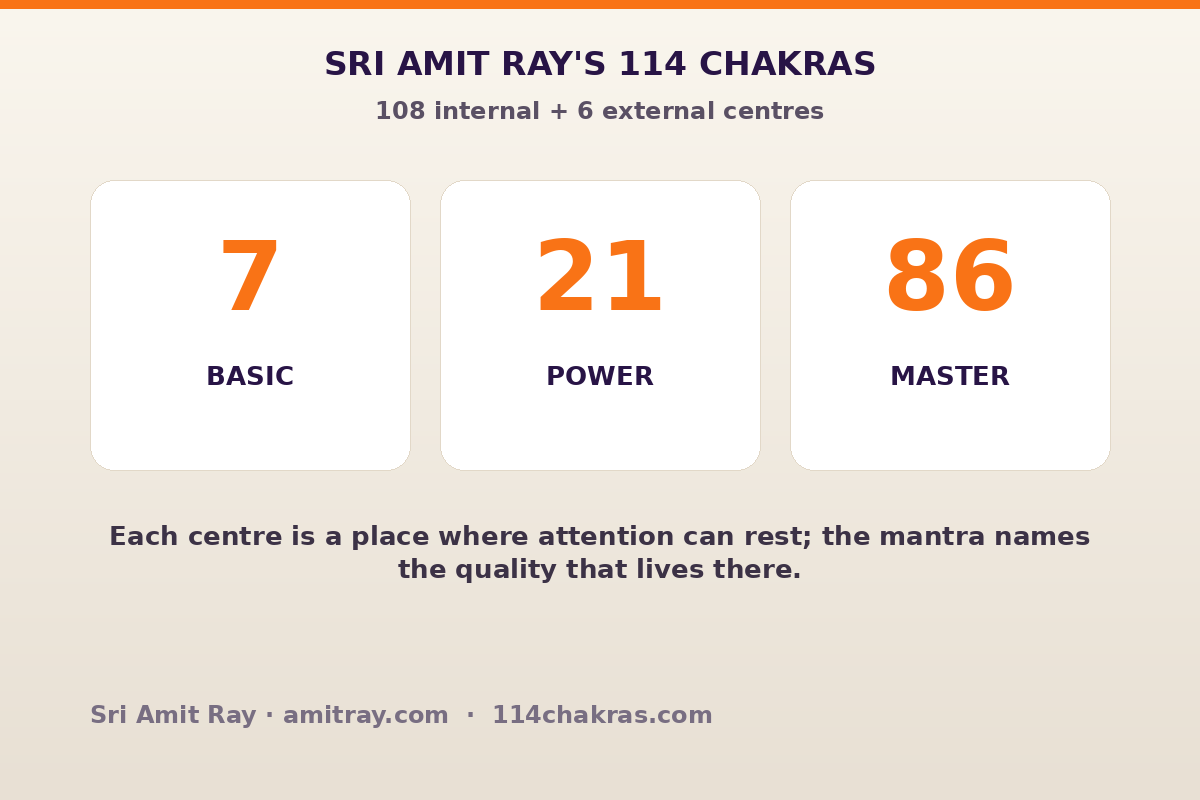
The names, locations and functions of the 114 chakras gives the map: 108 internal and 6 external centres, 7 basic, 21 power and 86 master chakras. For the sound, 112 mantras of the tradition places the mahāvākya among the recitations, and the full-body 114 chakra map locates the centres on the body.
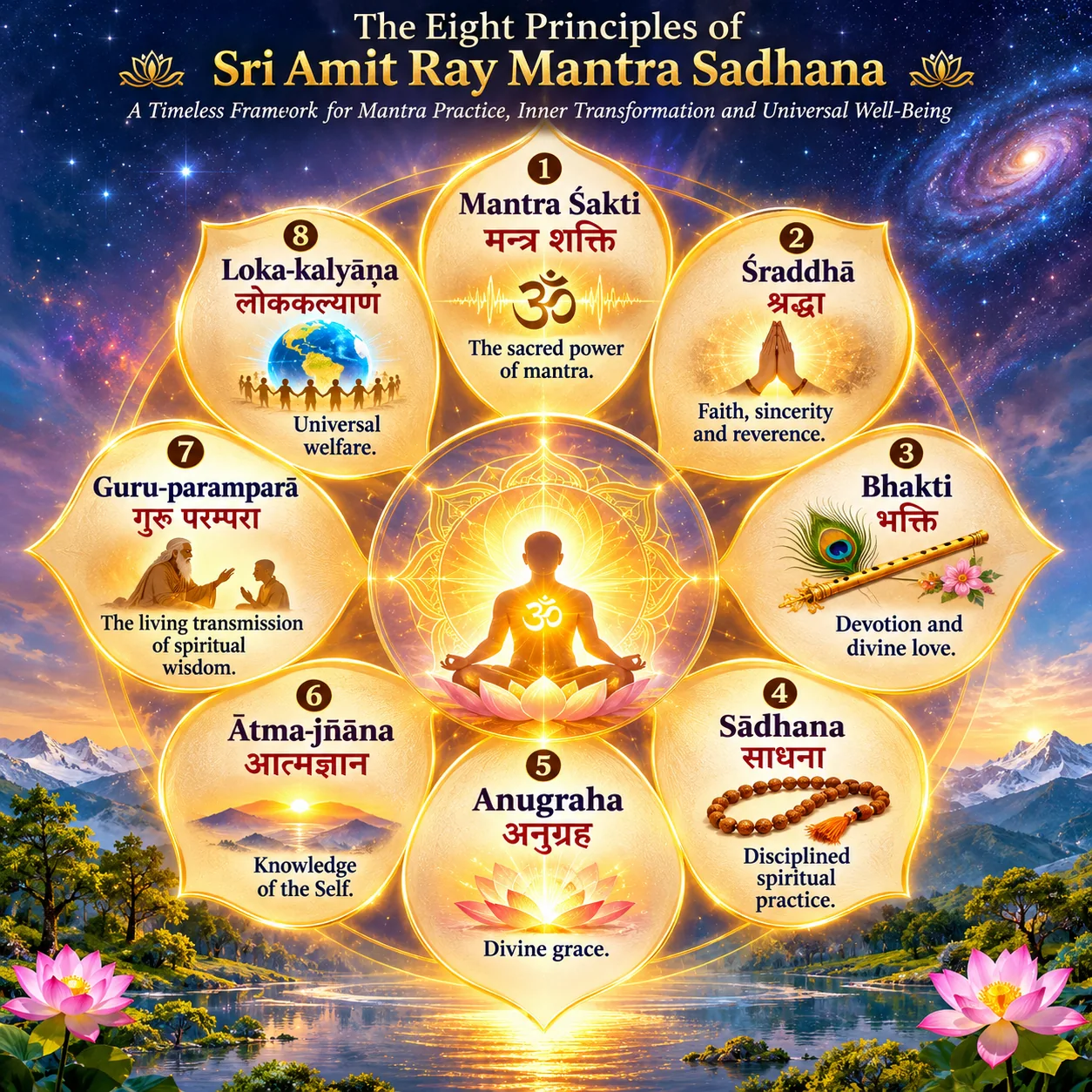
The Eight Principles of Sri Amit Ray Mantra Sādhana
In the tradition of Sri Amit Ray, the Aṣṭa Śraddhā — the eightfold faith — is the key to mantra sādhana. Each principle is a door the practice passes through, and together they describe how a mantra becomes a living discipline rather than a repetition.
- Mantra Śakti (मन्त्र शक्ति) — the sacred power of mantra.
- Śraddhā (श्रद्धा) — faith, sincerity and reverence.
- Bhakti (भक्ति) — devotion and divine love.
- Sādhana (साधना) — disciplined spiritual practice.
- Anugraha (अनुग्रह) — divine grace.
- Ātma-jñāna (आत्मज्ञान) — knowledge of the Self.
- Guru-paramparā (गुरु परम्परा) — the living transmission of spiritual wisdom.
- Loka-kalyāṇa (लोककल्याण) — universal welfare.
Read the full teaching: The Eight Principles of Sri Amit Ray Mantra Sādhanā.
Origin and traditional context
The sentence belongs to the Bṛhadāraṇyaka Upaniṣad, the largest of the early Upanishads, in the section attributed to Yājñavalkya. It is one of the four mahāvākyas — the great sayings — that the Vedantic tradition treats as the summary of the teaching: prajñānaṃ brahma, tat tvam asi, ayam ātmā brahma, and this one.
In practice it is not a household mantra. It is used in study, in contemplation, and in the traditional practice of hearing, reflecting and living the teaching. The later Vedantic schools disagree about how to interpret it — Śaṅkara reads it as identity, Rāmānuja as qualified identity — and those disagreements are part of the tradition rather than a problem with the sentence.
The mantra in the scriptures
Veda
Bṛhadāraṇyaka Upaniṣad 1.4.10, in the Yājñavalkya section. The sentence is one of the four mahāvākyas drawn from the four Vedas.
Mahabharata
The Gita’s account of the self beyond the body (chapter 2) and of the field and its knower (chapter 13) supplies the same recognition in a different idiom.
Puranas
The Puranic literature keeps the sentence in the mouth of teachers rather than as a liturgical formula, which is how it survives in the Vedantic lineages.
Ramayana and Tantra
The Ramayana’s teaching scenes use the same recognition in narrative. The Kashmiri Śaiva tradition takes aham as the name of the absolute itself, which is the most direct Tantric reading.
Spiritual significance and benefits
The tradition’s claims are about identity rather than improvement.
- A correction of reference. The sentence redefines what “I” points to before anything else is added.
- Not a boast. The claim is about awareness, not about the persona.
- Grounding. The basic centres keep the recognition from becoming abstraction.
- A study text. It is met in contemplation, not in a queue.
The tradition does not present the sentence as a way of feeling important. It presents it as a statement of what is already the case, to be recognised rather than acquired.
How to practice
Preparation
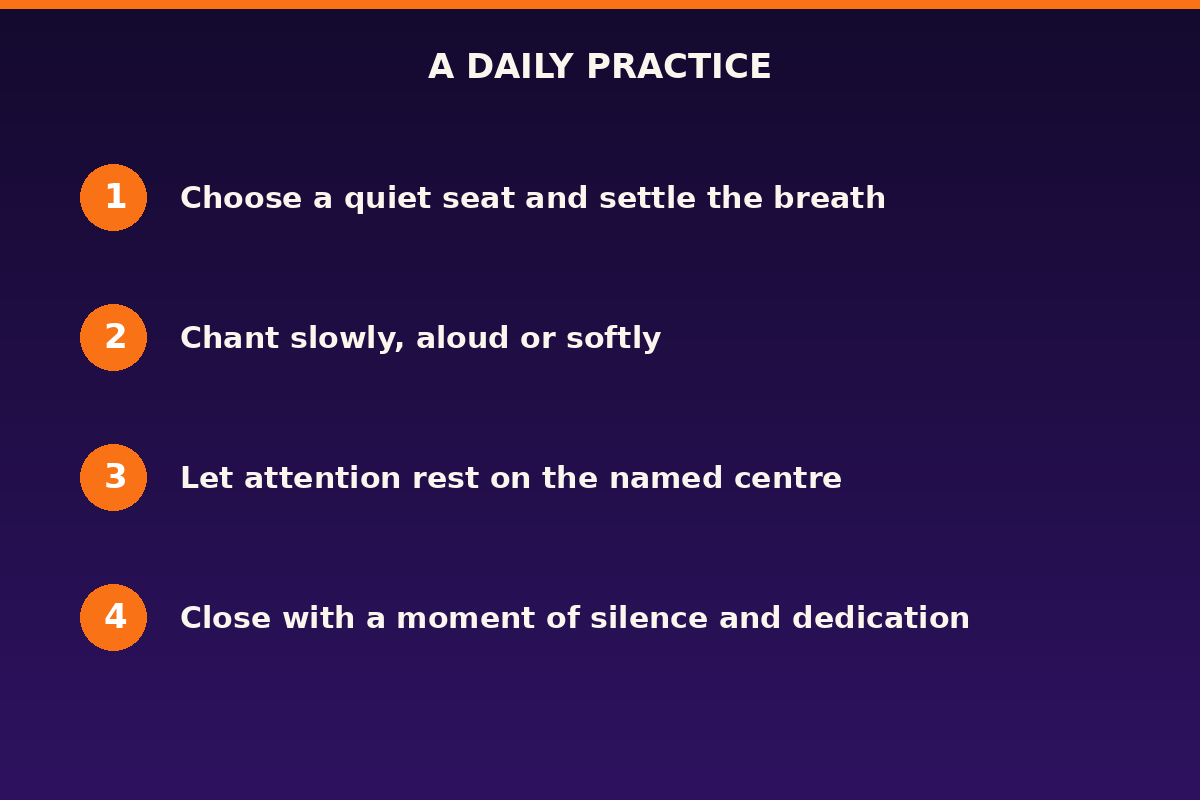
Read the sentence in the Upanishad’s setting first, so the words are not taken out of context. Sit quietly and let the breath settle. The practice is contemplation rather than repetition.
Contemplating
Say the words once, then sit with the question: what is it that knows these words? Follow the attention back to the knower rather than forward into the words. If the mind supplies a description — the body, the role, the memory — note it and ask who knows that description.
Duration and frequency
Ten minutes is enough, and once a day is the traditional pace. The sentence is short; the practice is the remaining silence. It belongs with study, so keep a text at hand.
A reflection for today
Before the next description of yourself, what is it that is aware of the description?
Frequently asked questions
What does Aham Brahmasmi mean?
“I am Brahman.” It is one of the four mahāvākyas, from Bṛhadāraṇyaka Upanishad 1.4.10, and it refers to the witnessing awareness rather than to the ego.
Can anyone recite Aham Brahmasmi?
Yes, you can chant but with love and devotion. If you have a teacher, ask them; if not, learn from a reliable recitation and keep the practice simple.
Is it a claim to be God?
No. The sentence identifies the self with Brahman in the sense of unlimited awareness, not the personality with a deity. The commentaries guard that distinction.
Do I need a teacher for this?
The tradition recommends one, because the sentence is easily misheard. Study of the text and a contemplative habit are the ordinary preparation.
Related mantras
Conclusion
Aham Brahmasmi is a sentence to be understood, not performed. Say it once, follow the attention back to what is aware, and let the silence after the words do the work the words cannot.