Ayam ātmā brahma is the opening claim of the Māṇḍūkya Upaniṣad, and the text spends the rest of its twelve verses unpacking it. The sentence is short — this self is Brahman — and the Upaniṣad’s method is to examine what “this self” actually includes by walking through the states of waking, dream and deep sleep.
अयमात्मा ब्रह्म
ayam ātmā brahma — “This self is Brahman.”
Meaning and translation
The three words are demonstrative: ayam, this; ātmā, self; brahma, Brahman. The demonstrative is the important part. The Upanishad does not say “the self in general” or “the supreme self”; it says this self — the one you can point to, the one reading the sentence.
The Māṇḍūkya then analyses the self into four quarters: the waking state, the dream state, deep sleep, and the fourth (turīya) which is not a state but what is present to all three. The sentence is the conclusion of that analysis rather than its premise.
That method matters for practice. A person can repeat “I am Brahman” indefinitely while remaining identified with the waking personality. The Upanishad’s route is slower and more honest: notice the dream, notice deep sleep, notice that something is present through all three, and then read the sentence again.
Sri Amit Ray and the 114 chakras
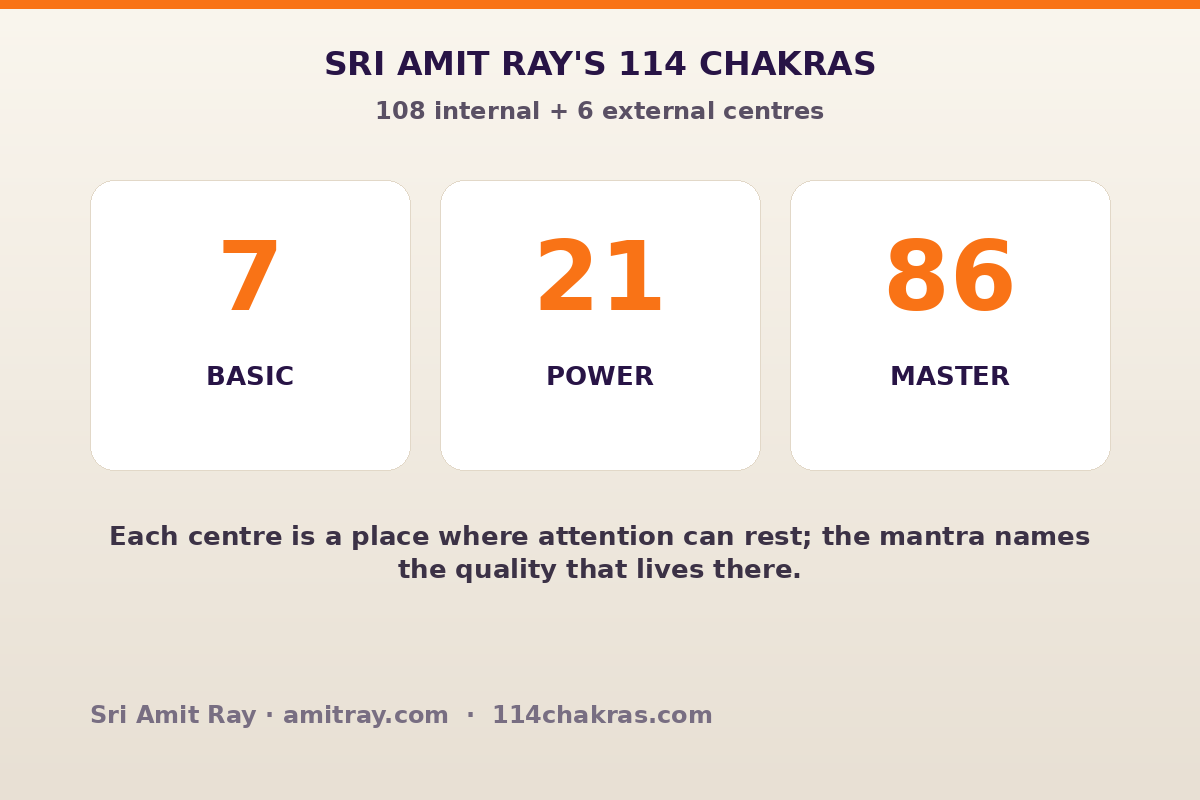
In Sri Amit Ray’s 114-chakra teaching, the recognition is associated with the master chakras that carry wide awareness. The Sahasrara centre and the default mode network discusses that awareness, and the names, locations and functions of the 114 chakras gives the map: 108 internal and 6 external centres, 7 basic, 21 power and 86 master chakras.
112 mantras of the tradition places the mahāvākya among the recitations, and the full-body 114 chakra map locates the centres on the body.
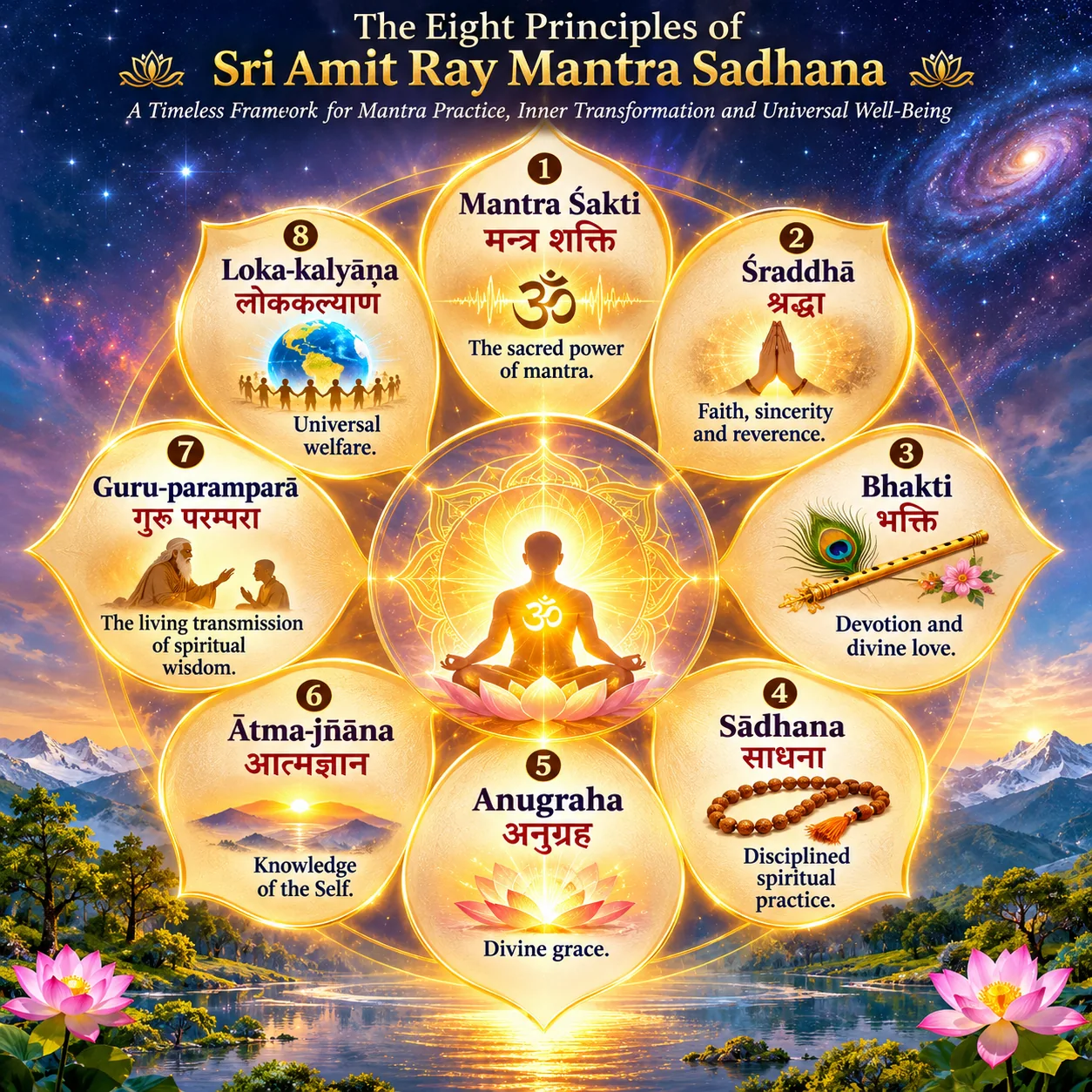
The Eight Principles of Sri Amit Ray Mantra Sādhana
In the tradition of Sri Amit Ray, the Aṣṭa Śraddhā — the eightfold faith — is the key to mantra sādhana. Each principle is a door the practice passes through, and together they describe how a mantra becomes a living discipline rather than a repetition.
- Mantra Śakti (मन्त्र शक्ति) — the sacred power of mantra.
- Śraddhā (श्रद्धा) — faith, sincerity and reverence.
- Bhakti (भक्ति) — devotion and divine love.
- Sādhana (साधना) — disciplined spiritual practice.
- Anugraha (अनुग्रह) — divine grace.
- Ātma-jñāna (आत्मज्ञान) — knowledge of the Self.
- Guru-paramparā (गुरु परम्परा) — the living transmission of spiritual wisdom.
- Loka-kalyāṇa (लोककल्याण) — universal welfare.
Read the full teaching: The Eight Principles of Sri Amit Ray Mantra Sādhanā.
Origin and traditional context
The sentence opens the Māṇḍūkya Upaniṣad, the shortest of the principal Upanishads and the one devoted to Om and to the four states. It is one of the four mahāvākyas, drawn from the Atharvaveda tradition.
In practice it belongs to study and contemplation. The Māṇḍūkya is recited in full in some traditions because it is short, and the sentence is used as the seed for the analysis rather than as a standalone affirmation.
The mantra in the scriptures
Veda
Māṇḍūkya Upaniṣad 1.2, the opening verse, which frames the analysis of the four states and the syllable Om.
Mahabharata
The Gita’s discussion of the self beyond the body (chapter 2) and of the knower of the field (chapter 13) runs the same analysis in a different vocabulary.
Puranas
The Puranic teaching material keeps the sentence in a teacher’s mouth, which is how it survives in the Vedantic lineages.
Ramayana and Tantra
The Ramayana’s instruction scenes carry the same recognition. The Tantric traditions read the four states as the four levels of awareness the mantra practice moves through.
Spiritual significance and benefits
The tradition’s claims are about analysis rather than assertion.
- A demonstrative claim. Ayam points at the hearer, which keeps the sentence personal.
- Four states as method. The analysis is the practice, and the sentence is its conclusion.
- An honest route. It does not ask for belief before observation.
- A short text. The whole Upanishad can be read in ten minutes.
The tradition does not present the sentence as an affirmation to repeat. It presents it as the end of an examination, which is why the Upanishad spends its verses on the states first.
How to practice
Preparation
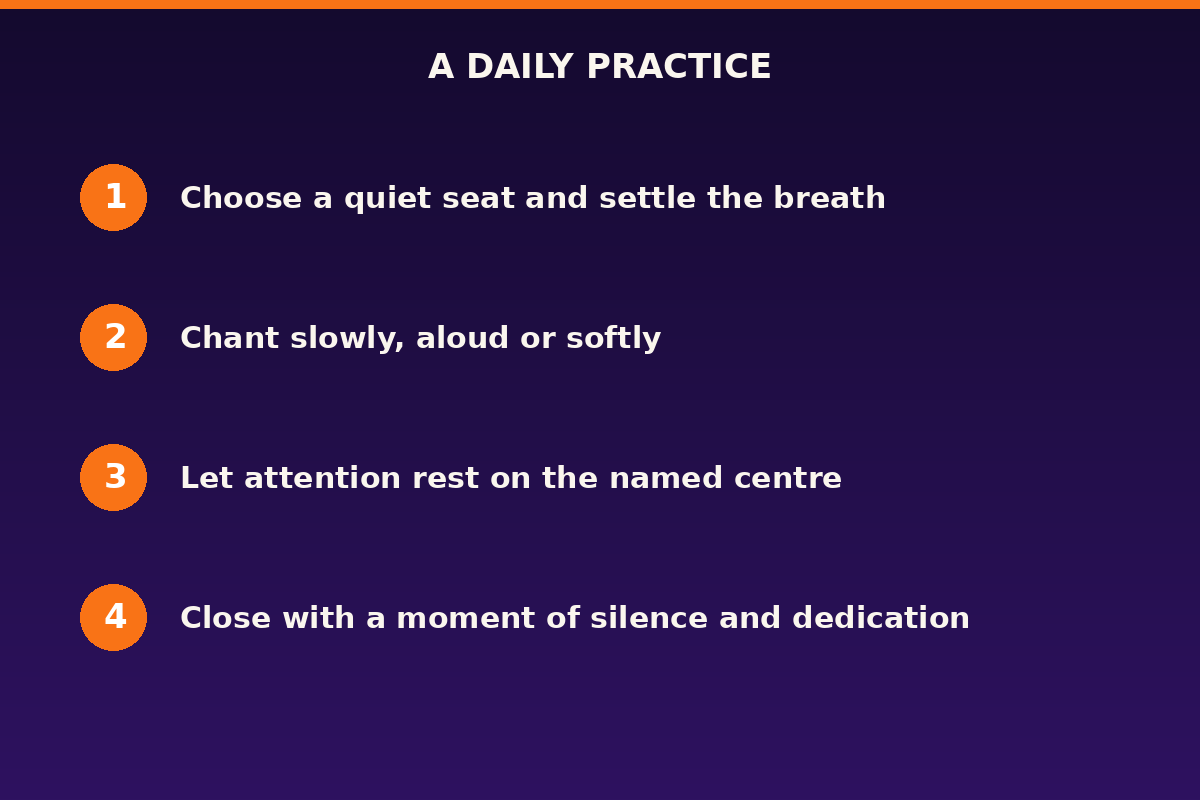
Read the twelve verses of the Māṇḍūkya, or at least the first six. The practice needs the analysis, not only the sentence. Sit quietly afterwards.
Contemplating
Take the three states in turn and ask what is present in each. In waking, there is a world and a knower. In dream, a world and a knower with no external objects. In deep sleep, no world and no knower — yet something is present, since you can say you slept. Then say the sentence once.
Duration and frequency
Fifteen minutes, and daily during a period of study. The Upanishad is short enough to be read in the same session.
A reflection for today
What was present in deep sleep, where there was no world and no you to notice it?
Frequently asked questions
What does Ayam Atma Brahma mean?
“This self is Brahman” — the opening of the Māṇḍūkya Upaniṣad. Ayam points at the hearer, which keeps the claim personal.
Can anyone recite Ayam Atma Brahma?
Yes, you can chant but with love and devotion. If you have a teacher, ask them; if not, learn from a reliable recitation and keep the practice simple.
Why does the Upanishad discuss sleep?
Because the four states are the route to the claim. Deep sleep shows that awareness is present even when the personality is absent, which is the observation the sentence rests on.
Is it the same as Aham Brahmasmi?
The claim is the same; the method differs. This sentence opens an analysis of the states, while Aham Brahmasmi closes a teaching about the self in the world.
Related mantras
Conclusion
Ayam Atma Brahma is the end of an examination. Read the Māṇḍūkya’s four states, sit with the question of what was present in deep sleep, and then say the sentence — slowly, and only if it is true when you say it.