Bhadraṃ karṇebhiḥ is the prayer a student hears at the start of a Vedic recitation: may we hear what is auspicious with our ears, see what is auspicious with our eyes, and live out the span the gods have given with steady limbs. It is a prayer about receptivity — the quality a teaching needs before it can be received.
भद्रं करणेभिः शृणुयाम देवाः ।
भद्रं पश्येमाक्षभिर्यजत्राः ।
स्थिरैरङ्गैस्तुष्टुवांसस्तनूभिः ।
व्यशेम देवहितं यदायुः ॥
bhadraṃ karṇebhiḥ śṛṇuyāma devāḥ bhadraṃ paśyemākṣabhir yajatrāḥ sthirair aṅgais tuṣṭuvāṃsas tanūbhiḥ vyaśema devahitaṃ yad āyuḥ
“O gods, may we hear the auspicious with our ears; may we see the auspicious with our eyes, O you who are worshipped; praising with steady limbs and bodies, may we live out the span the gods have allotted.”
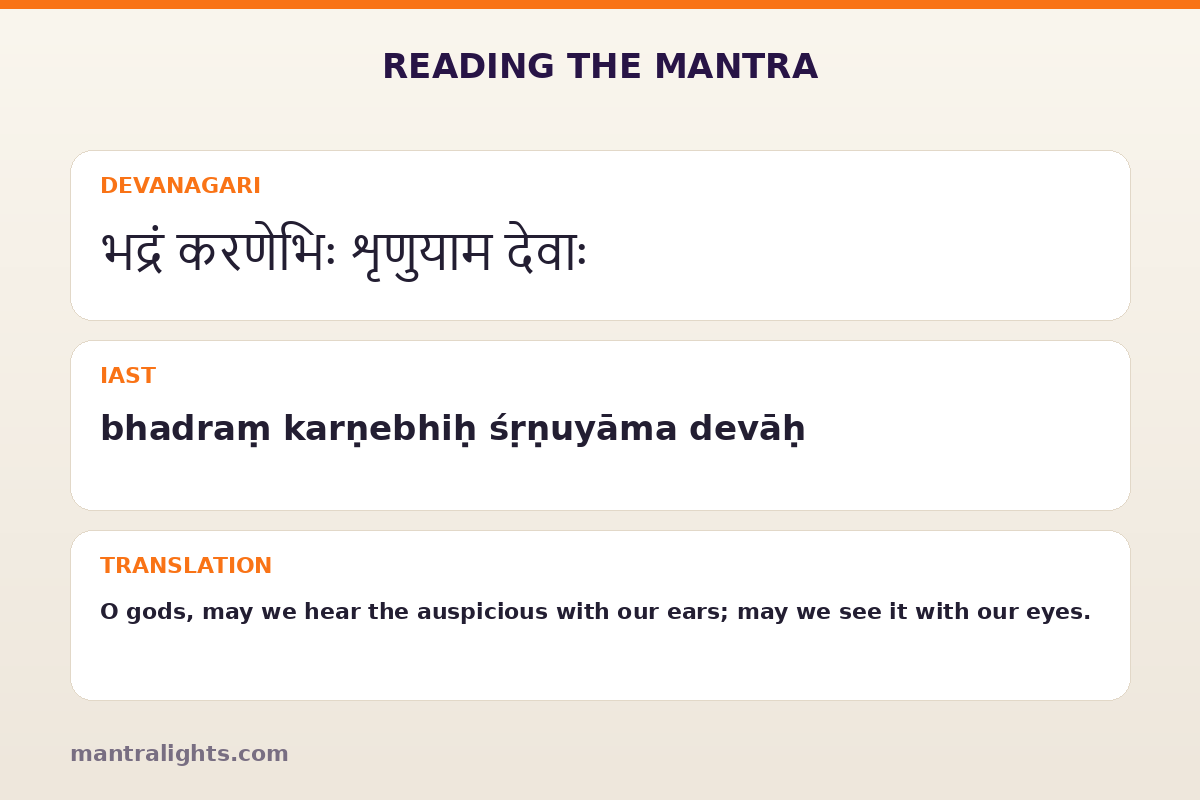
Meaning and translation
Each clause names a faculty and asks that it be used well. Bhadraṃ is the auspicious, the good, the kindly. Karṇebhiḥ is by the ears; akṣabhiḥ by the eyes. The second half asks for sthiraiḥ aṅgaiḥ — steady limbs — and for the full span of life, devahitaṃ yad āyuḥ, the lifetime allotted by the gods.
The prayer is not for good news; it is for good reception. That distinction matters: a person who hears what is said, rather than what they expected, has already received half the teaching. The Vedic recitation begins with this because the text that follows is heard, not read.
Sri Amit Ray and the 114 chakras
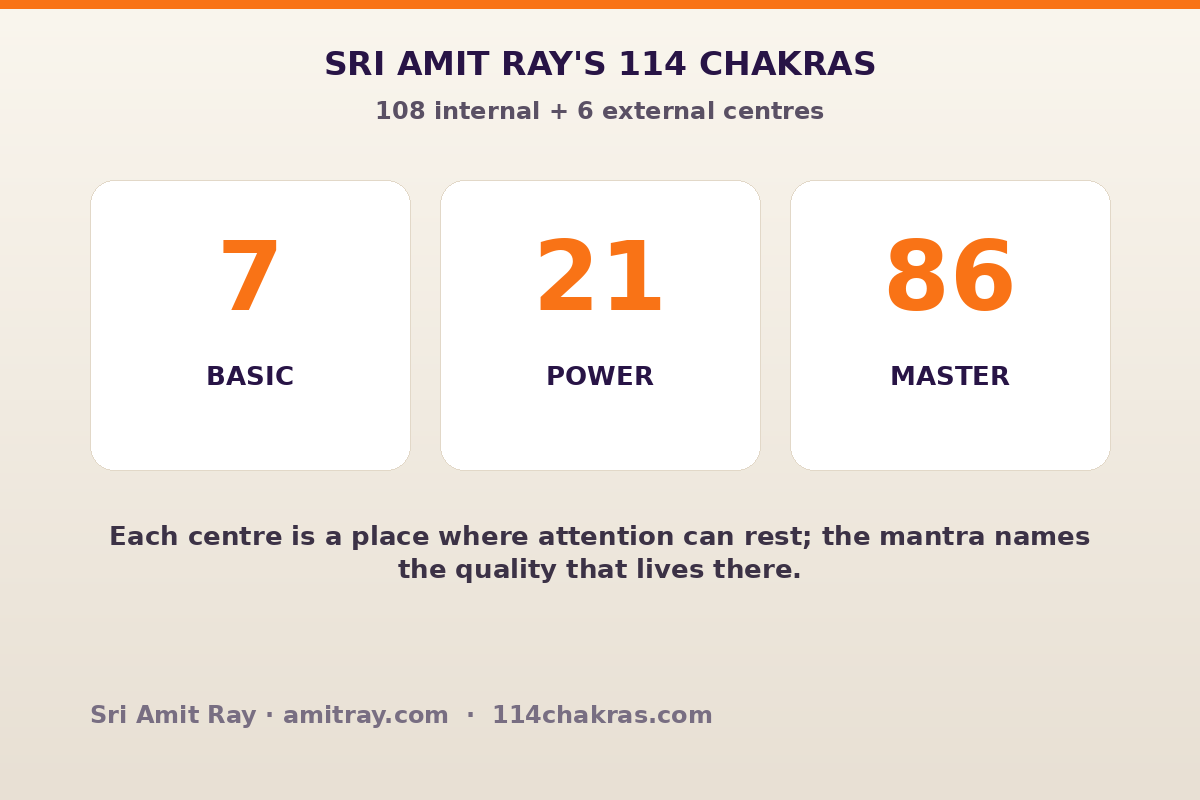
In Sri Amit Ray’s 114-chakra teaching, receptivity is associated with the centres of hearing and understanding and with the master chakras that carry clarity. The names, locations and functions of the 114 chakras gives the map: 108 internal and 6 external centres, 7 basic, 21 power and 86 master chakras.
The Sahasrara centre and the default mode network discusses the awareness the prayer opens toward, and 112 mantras of the tradition places the śānti formula among the recitations. The full-body 114 chakra map locates the centres on the body.
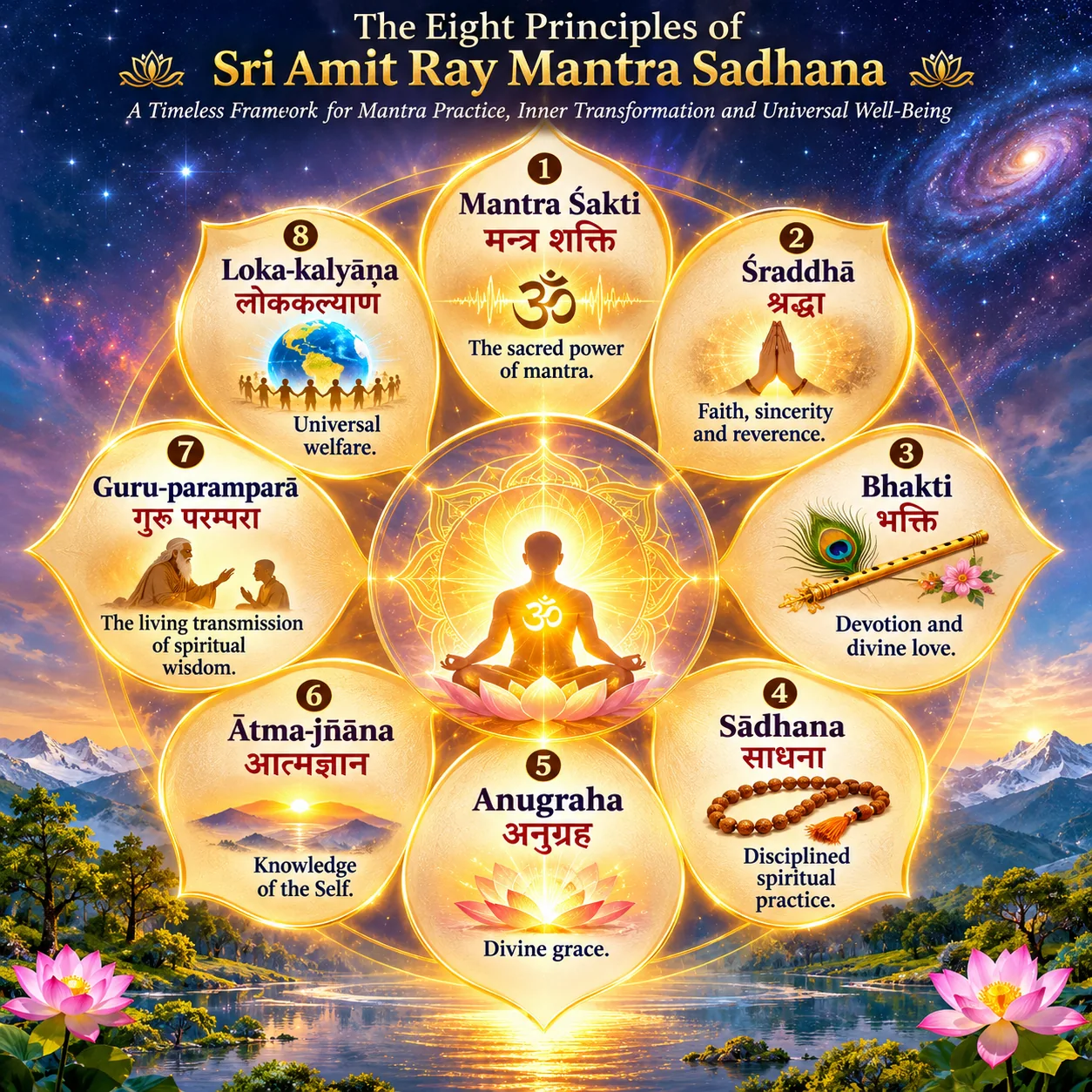
The Eight Principles of Sri Amit Ray Mantra Sādhana
In the tradition of Sri Amit Ray, the Aṣṭa Śraddhā — the eightfold faith — is the key to mantra sādhana. Each principle is a door the practice passes through, and together they describe how a mantra becomes a living discipline rather than a repetition.
- Mantra Śakti (मन्त्र शक्ति) — the sacred power of mantra.
- Śraddhā (श्रद्धा) — faith, sincerity and reverence.
- Bhakti (भक्ति) — devotion and divine love.
- Sādhana (साधना) — disciplined spiritual practice.
- Anugraha (अनुग्रह) — divine grace.
- Ātma-jñāna (आत्मज्ञान) — knowledge of the Self.
- Guru-paramparā (गुरु परम्परा) — the living transmission of spiritual wisdom.
- Loka-kalyāṇa (लोककल्याण) — universal welfare.
Read the full teaching: The Eight Principles of Sri Amit Ray Mantra Sādhanā.
Origin and traditional context
The verse is a Vedic śānti pāṭha, recited before the study of a text and at the start of a recitation. It appears in the Vedic ritual literature and is used across the traditions that teach by hearing — which is most of them.
In practice it is said at the beginning of a class, before a recitation, and at the start of the day. Its position matters: the prayer comes before the teaching, not after, so that the listening itself is blessed.
The mantra in the scriptures
Veda
The verse belongs to the Vedic śānti material recited before study, and it is used across the Vedic schools.
Mahabharata
The Gita’s insistence on hearing the teaching before acting on it (chapters 2 and 18) assumes exactly this receptivity.
Puranas
The Puranic recitations open in the same way — a prayer for the audience’s capacity to hear.
Ramayana and Tantra
The Ramayana’s recitation tradition opens with śānti, and the Tantric rites use the same formula before transmitting a mantra.
Spiritual significance and benefits
The tradition’s understanding is about listening, steady practice and the length of a life.
- Good reception. The prayer asks for the capacity to hear, not for pleasant news.
- Steady limbs. The body is included, since a teaching is received in a body.
- The whole span. It asks for a full life, not a longer one.
- Placed before study. The prayer comes first, which is the point.
Living the eight respects. The verse is śraddhā in the form of readiness, and guru-paramparā in the form of a hearing tradition. Sādhanā is the study that follows, and ānugraha is the span of life asked for. Loka-kalyāṇa appears in the plural: śṛṇuyāma, may we hear — the prayer is never only for oneself.
How to practice
Preparation
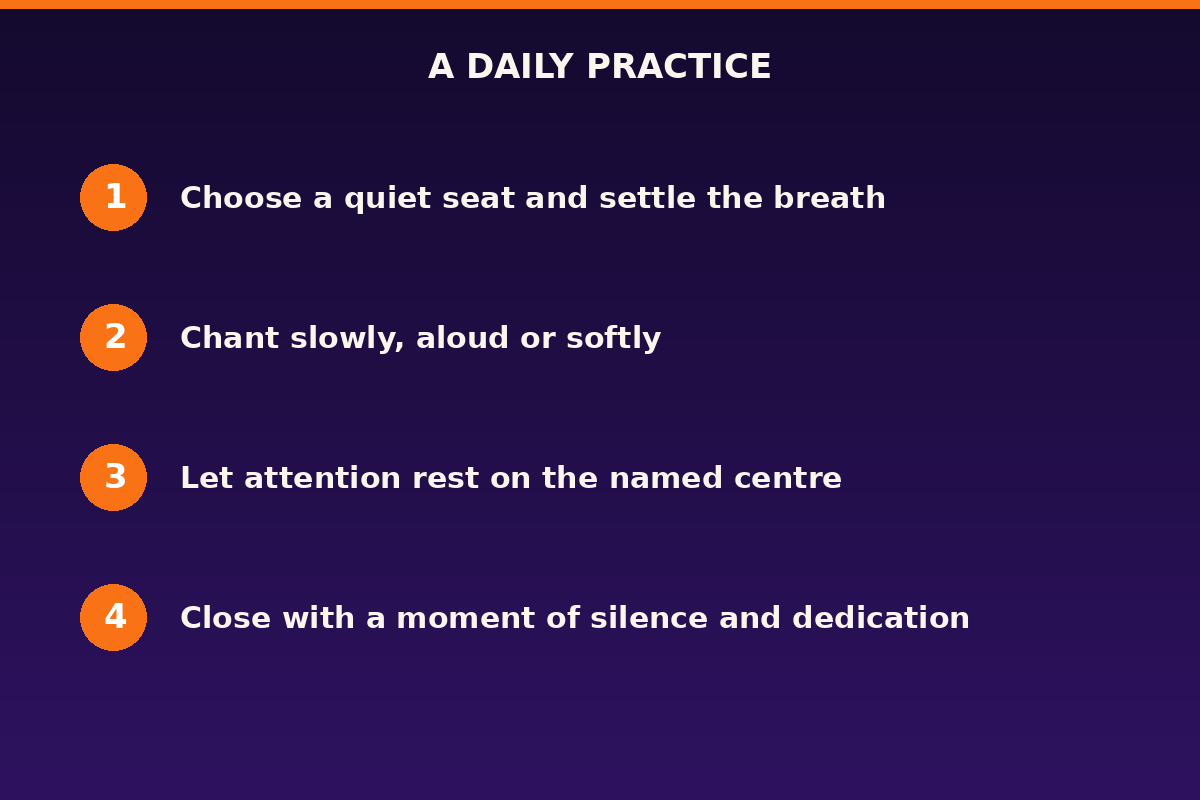
Say it before a class, a recitation or a study session. No preparation beyond attention.
Reciting
Say the four lines slowly, and let the ear be the subject: hearing, seeing, standing, living. If you are with others, say it together — the plural is the original form.
Duration and frequency
Once at the start of a study session. The verse is short by design and belongs to the threshold.
A reflection for today
What did you hear this week that you had already decided not to hear?
Frequently asked questions
What does Bhadram Karnebhih mean?
“O gods, may we hear the auspicious with our ears; may we see the auspicious with our eyes; may we live out the span allotted.” It is a prayer for good reception.
Can anyone recite Bhadram Karnebhih?
Yes, you can chant but with love and devotion. If you have a teacher, ask them; if not, learn from a reliable recitation and keep the practice simple.
When is it said?
Before the study of a text, at the start of a recitation, and at the beginning of the day. It is a threshold prayer.
Why does it mention the body?
Because a teaching is received in a body: steady limbs, steady hearing. The Vedic śānti formulas regularly include the physical frame.
Related mantras
Conclusion
Bhadram Karnebhih is a prayer for good ears. Say it before you learn, mean the plural, and let the verse do its work: it blesses the listening before it blesses the lesson.